
Every Short, with the numbers behind it.
25 Shorts so far. Pick one for the key facts and the sources it cites.
🌍 Earth
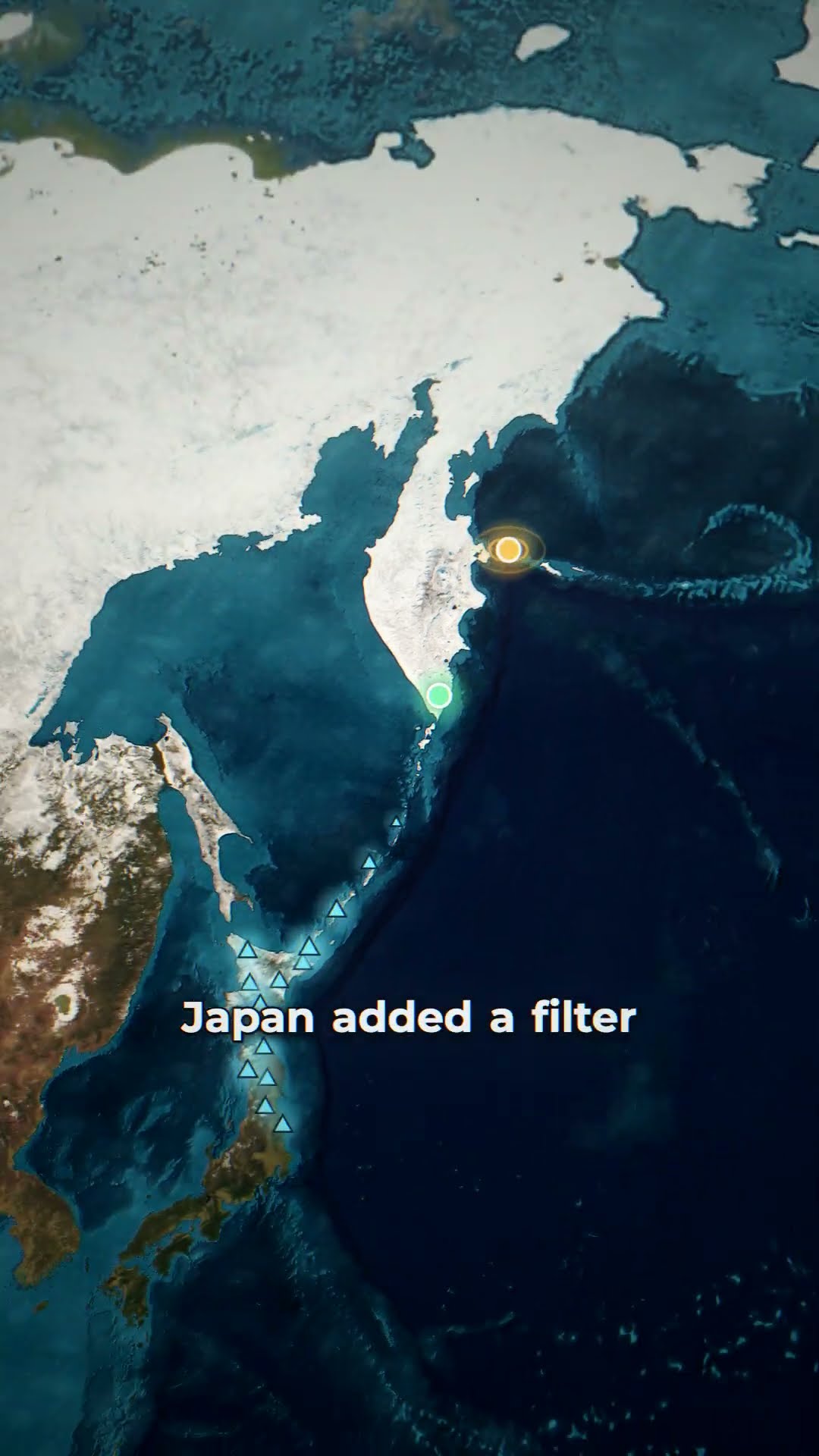 Japan's 9.9 Earthquake Warning: What Really HappenedPhones across Japan, from Hokkaido down to Tokyo, lit up with an alert for a magnitude 9.9 quake that never happened. The real event was a much smaller M6.9 deep beneath Russia's Kamchatka Peninsula. The Short walks through why the system overestimated it, including a sensor filter that had been switched off by mistake, and how early warnings race slower S waves using faster P waves.1.1K views
 Strait of Hormuz: Why 24 Miles of Water Sets Your Gas PriceA narrow channel between Iran and Oman is the Persian Gulf's only sea exit, so a huge share of the world's oil has to squeeze through it. The Short shows the two tanker lanes, who depends on that oil, and why pipelines can't replace it. It then ties a sharp drop in traffic in 2026 to jumps in crude and US pump prices.2.2K views
 Kanlaon Volcano Erupts Again: Why the Philippines Sits on the Ring of FireKanlaon on Negros Island blew again in October 2026, adding to a long run of eruptions. The Short explains that seafloor diving into deep trenches on both sides of the Philippines releases water, which melts rock above it and feeds the islands' volcanoes. It places this within the Pacific Ring of Fire, the same belt where Panama's big quake struck the day before.11K views
 Panama Earthquake: Why a 7.7 Just HitA powerful, shallow quake shook Panama's Azuero Peninsula in October 2026. The Short explains that Panama rides on its own small plate, hemmed in by four bigger ones, and that this time the crust slipped sideways rather than one plate sliding under another. It also covers early damage counts and the effect on the Panama Canal.16K views
 The True Size of Africa: How Many Countries Fit Inside?Flat world maps shrink Africa compared with countries far from the equator. This Short drops several large countries, shown at their real size, onto Africa to reveal how much room it has. It explains that the common Mercator map inflates high-latitude areas while Africa, sitting on the equator, barely gets enlarged.21K views
 Hurricane Isaias: Why It Hit Florida in an El Niño YearEl Niño usually brings upper-level winds that rip Atlantic storms apart, and the 2026 season had been unusually quiet. The Short explains how Hurricane Isaias still formed late and then rapidly strengthened over an abnormally warm Gulf of Mexico before striking the Florida Panhandle. It also lays out the surge, rain and power outages that followed.29K views
 El Niño Snow Forecast 2026–27: Will It Snow Where You Live?Using snowfall records from past strong El Niño winters, this Short checks how six US cities fared. The pattern is that El Niño moves snow around rather than erasing it: northern cities tend to get less while the South and East Coast can get hit. It stresses that this is history, not a forecast for the coming winter.53K views
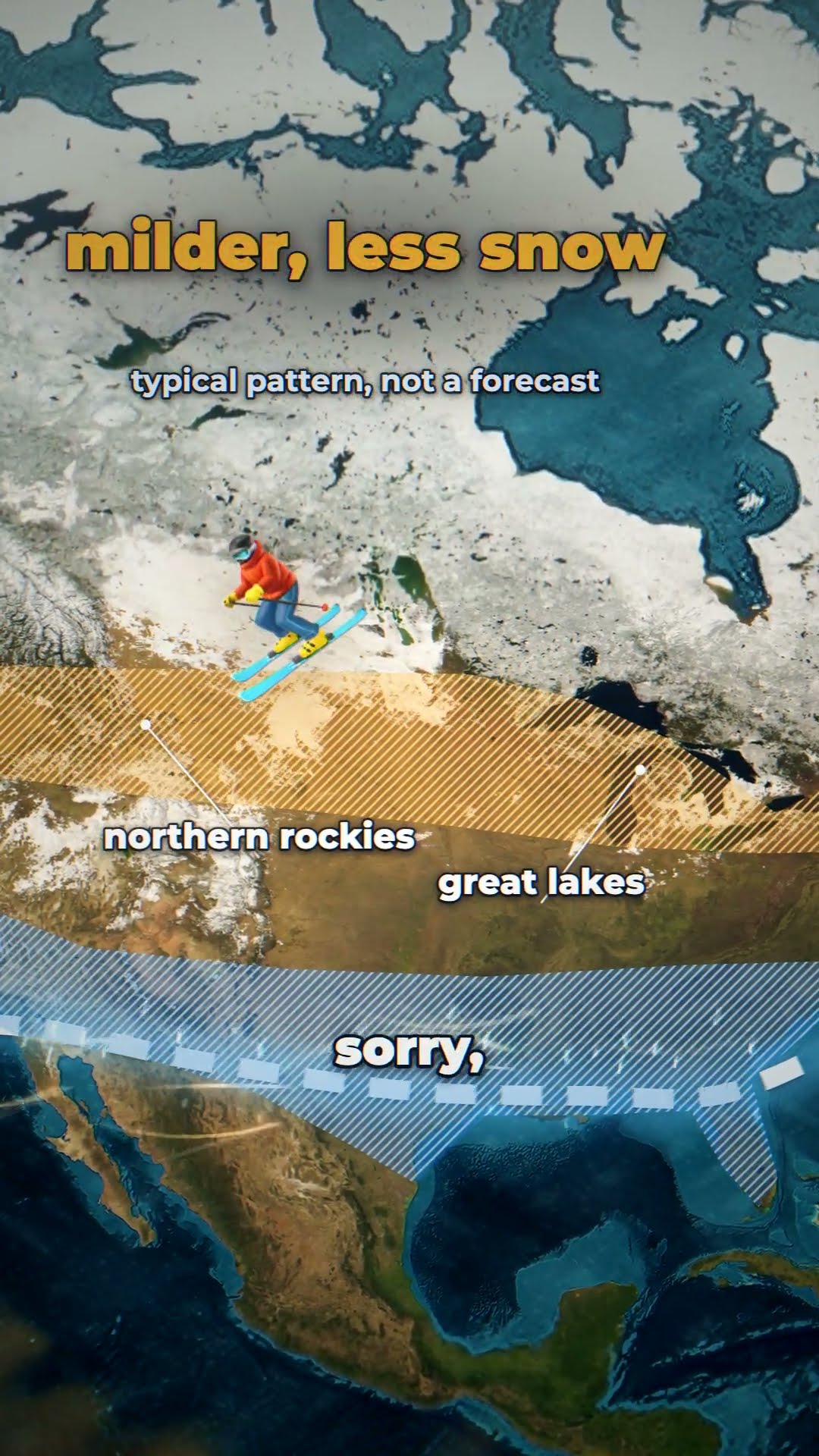 El Niño Winter 2026–27: Who Gets Snow, Who Gets Rain?A very strong El Niño was building in the Pacific heading into winter 2026–27. The Short explains how warm central-Pacific water nudges the jet stream south, typically making the southern US wetter and the north milder with less snow, while the East Coast can see big snowstorms. It warns that El Niño only tilts the odds, pointing to 2015–16 when Southern California stayed slightly dry.3.7K views
 5 Cities Winter Can't BeatThis Short counts down the five warmest big US cities by yearly average temperature. Each entry gets a quick reason, such as surrounding warm ocean water, a nearby warm current, or dry desert air that cools off at night. Honolulu takes the top spot thanks to its tropical location far out in the Pacific.1.1K views
 Why the Pacific Is Running a FeverTrade winds normally pile warm water up near Indonesia, but every few years they slacken and that warm water sloshes back east across the Pacific. The Short explains this El Niño cycle, how Peruvian fishermen first noticed it, and why the 2026 event could rival or beat the strongest on record.3.7K views
 Why Greenland Looks So Big: The Map Is Stretching ItOn many world maps Greenland looks about as big as Africa, but that's a side effect of flattening a round planet. The Short explains that Mercator's 1569 sailing map keeps compass directions straight at the cost of inflating areas toward the poles. It then compares true sizes to show how much Greenland, Alaska and Russia are exaggerated.3.2K views
 5 Cities Sinking 200× Faster Than VeniceVenice is famous for sinking, yet it's slow compared with several other big cities. This Short ranks five places where the ground is dropping fastest and blames the same culprit for all of them: pumping groundwater out of soft clay, which then compacts for good. The rates shown are the highest local measurements.963 views
 Everest Isn't the Tallest MountainWhich mountain is "tallest" depends on how you measure. Everest wins only when you count from sea level. Measured from its base on the ocean floor, Hawai'i's Mauna Kea is bigger, and because Earth bulges at the equator, Ecuador's Chimborazo reaches farthest from the planet's center.2K views
🦤 Life
 They Were Protected. It Didn't Matter.This Short looks at three animals that disappeared even though they lived on protected land. A Costa Rican toad, an Australian frog and a Christmas Island bat all vanished despite their habitat being safe from bulldozers. The point is that legal protection can stop land clearing but not disease, drought or invasive species.145 views
 Three Animals We Lost in Your LifetimeThree animals have slipped away within living memory. The Short covers a river dolphin that a search of the Yangtze failed to find, the last known tortoise from Pinta Island, and the final male northern white rhino. With no remaining female able to carry a calf, the rhino subspecies is considered functionally extinct.933 views
 Nobody Hunted These. They Still Vanished.Three extinctions in this Short were caused not by hunters but by animals that hitched a ride. Cats brought by a lighthouse, rats escaping a shipwreck, and a snake carried to Guam after the war each wiped out island birds. The message is that every one of these killers arrived as a passenger.266 views
 1,500 Golden Toads. Two Years Later, Zero.Costa Rica's golden toad went from a booming breeding season to gone in about two years, inside a protected reserve where nobody cut trees or hunted it. The Short explains how an El Niño lifted the cloud mist and dried out the breeding pools before tadpoles could grow. Chytrid fungus is named as the leading explanation for the final collapse.25 views
 There Were 5 Billion. Then There Was One.The passenger pigeon was once North America's most abundant bird, yet it went extinct within living memory of its peak. Railroads let hunters ship meat far and fast, but the Short argues the deeper problem was that the birds only bred in huge colonies, so once flocks thinned they stopped reproducing. It ends with Martha, the last of her kind.17 views
🪐 Space
 How Do You Get to Mars? Mostly With the Engines OffA trip to Mars is mostly coasting: a short engine burn sets the spacecraft on its path, and the speed it inherited from Earth's orbit carries it the rest of the way. The Short covers why launches must wait for Mars to be in the right spot, how long the cruise takes, and the fast, self-guided landing at the end.1.8K views
 The Moon Is Leaving Us. It's Our Fault.The Moon is slowly drifting away from Earth, and scientists track it by bouncing lasers off mirrors the Apollo crews left behind. The Short explains that the tides the Moon raises get dragged ahead by Earth's spin, and that bulge pulls the Moon into a slightly wider orbit. Eventually it will look too small to fully block the Sun.4.4K views
 Rockets Don't Go Up. They Go SidewaysReaching space is the easy part; staying there takes enormous sideways speed. This Short explains why rockets pitch over soon after liftoff: almost all the energy of an orbit goes into moving horizontally, not climbing. Its takeaway is that orbit is about speed rather than height.1.9K views
 Astronauts Aren't Floating. They're FallingAstronauts look weightless, but gravity up there is nearly as strong as on the ground. The Short explains that they and the station are falling together, which is why they float. They also travel sideways so fast that Earth curves away beneath them as quickly as they drop, and that endless fall is an orbit.1.6K views
🔬 Science
 The Telescope Buried Under the South PoleIceCube is a detector frozen deep in Antarctic ice that looks for neutrinos instead of light, and the Short ties it to the 2026 Nobel Prize in Physics awarded to Francis Halzen. It explains that a neutrino occasionally hits the ice and makes a faint blue flash that sensors pick up. By mostly watching for tracks coming up through the Earth, IceCube traced one particle back to a distant galaxy.1.1K views
 The Sun Isn't Yellow. It's White.Sunlight mixes every color together, so from space the Sun actually looks white. The Short explains that air scatters blue light more than red, which colors the sky blue and leaves the Sun looking yellowish from the ground. At sunset the light passes through even more air and turns orange.1.2K views
 Your White Light Is Hiding a RainbowOrdinary white light is really every color travelling together. This Short shows a prism bending each wavelength by a slightly different amount, which fans the colors out into a rainbow.338 views